How often should block paving actually be cleaned?
5 min read Block Paving Revive
More often is not better. Cleaning block paving every spring without re-sanding is one of the surest ways to wreck it, and we see the results constantly.
This is one of the few maintenance questions where the instinctive answer is wrong. With most things, more frequent care is better. With block paving, cleaning too often — or rather, cleaning without finishing the job — actively destroys the drive.
The honest interval
Every three to five years for a proper clean, treatment and re-sand. Nearer three if the drive is shaded, under trees, or on the north side of the house. Nearer five if it is open, sunny and gets brushed occasionally.
Between those, the useful maintenance is free: brush it, clear the leaves in autumn, and top up any joints running low with kiln-dried sand.
Why annual washing damages it
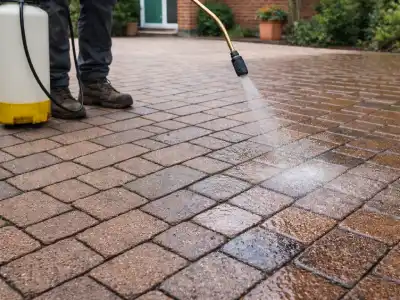
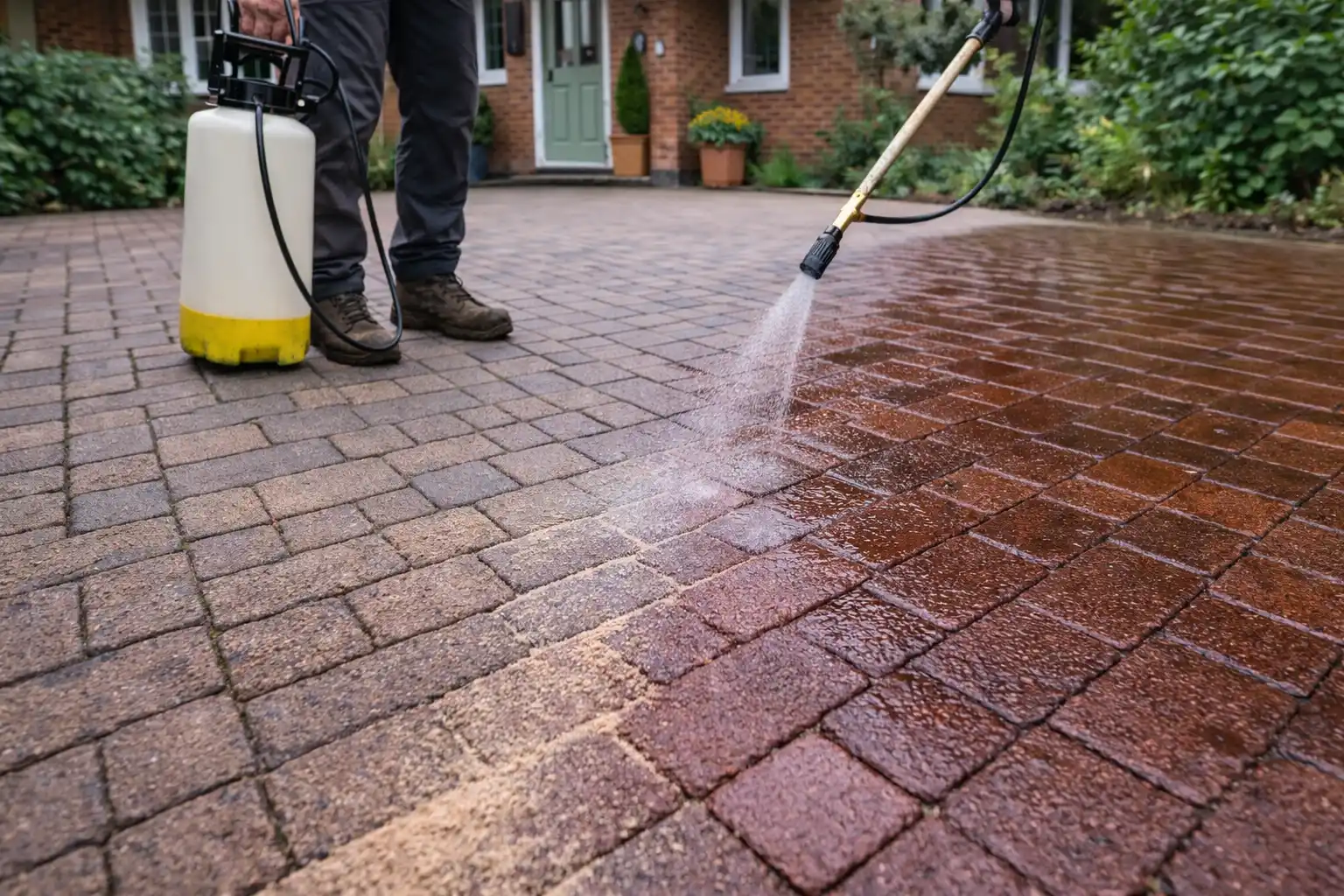
Every pressure wash removes joint sand. That sand is structural — it holds each block in interlock with its neighbours, and it is the only thing doing so.
Strip it out and leave the joint empty, and it refills with windblown soil and organic debris far faster than it ever held clean sand. So the following spring is weedier, not cleaner. Do it a few years running and the blocks lose restraint, start to rock, and the edges begin to creep outward. We are regularly called to drives that have been washed religiously every year and are in worse condition than the neighbour's that was left alone.
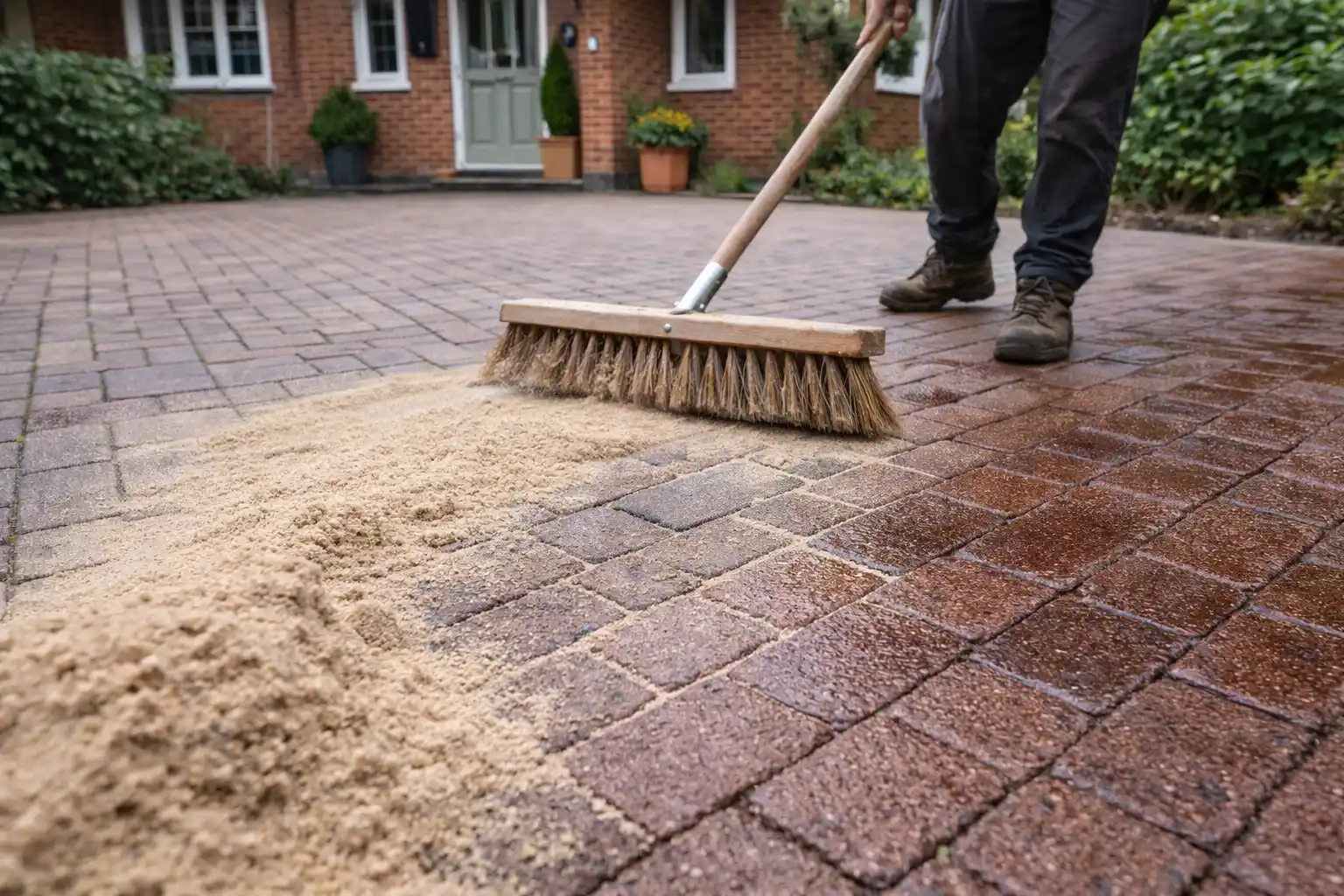
The problem is not the cleaning. It is cleaning without re-sanding.
Signs it is genuinely due
- Weeds or moss returning across the drive rather than in one damp corner.
- Joints visibly low — you can see a depression where sand should be.
- A block that moves underfoot.
- Colour flattened and the surface looking uniformly grey-green.
- Slippery underfoot in wet weather.
That last one is a safety issue rather than a cosmetic one and moves it up the list regardless of when it was last done.
What extends the interval
Sealing, mostly. A sealed drive with stabilised joints stays clear noticeably longer, because the sand stops washing out and seeds have a far less welcoming surface. Polymeric jointing does something similar.
Beyond that: cut back anything overhanging the drive so light and air get to it, clear leaves before they rot in place, and keep gutters from discharging onto it. Unglamorous, free, and it makes a real difference to how often you need someone out.
The short version
Brush it often. Have it properly cleaned and re-sanded every few years. Never pay for a wash that does not put the sand back. Get that right and a block paved drive lasts decades; get it wrong and you will be relaying it inside ten years.
Common questions
- Can I clean my block paving myself?
- You can, but re-sand afterwards or you will do more harm than good. Brushing and clearing leaves is the genuinely useful maintenance between professional cleans.
- Is cleaning block paving every year a bad idea?
- Yes, if the joints are not refilled each time. Repeated washing strips the sand that holds the blocks in interlock, and the drive deteriorates faster than one left alone.
- Does sealing mean I can clean it less often?
- It usually extends the interval, because stabilised joints resist washout and regrowth. It does not replace cleaning entirely.