Kiln-dried or polymeric sand: which should go in your joints?
6 min read Block Paving Revive
One is cheap, proven and washes out. The other resists weeds for years and is unforgiving if installed badly. Which is right depends on your drive, not on which is better.
Once a block paved drive has been cleaned, something has to go back into the joints. There are two realistic options and they suit different situations. Neither is simply better.
Kiln-dried sand
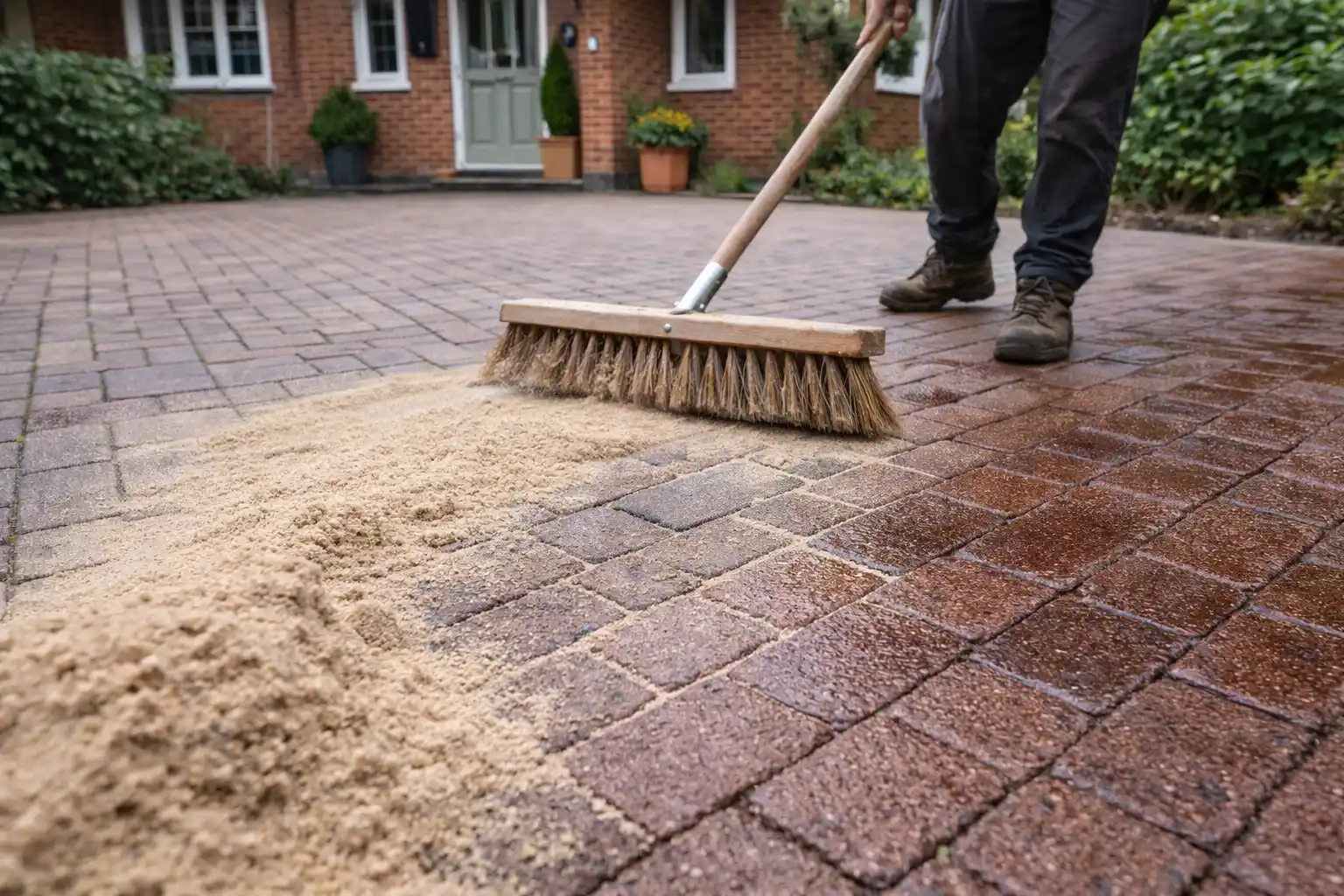
Fine silica sand, dried so it flows and packs down into the joint. It is what most drives were laid with and what most are re-sanded with.
In its favour:
- Inexpensive, so more of the budget goes on the clean itself.
- Proven, and what the paving was designed around.
- Easy to top up yourself — a bag and a stiff brush.
- Nothing to go wrong in the installation.
Against:
- Washes out in heavy rain and blows out in dry weather, so it needs topping up.
- Once it starts collecting dirt, it becomes a seed bed again.
- On a slope or anywhere with running water, it goes quickly.
Polymeric jointing compound
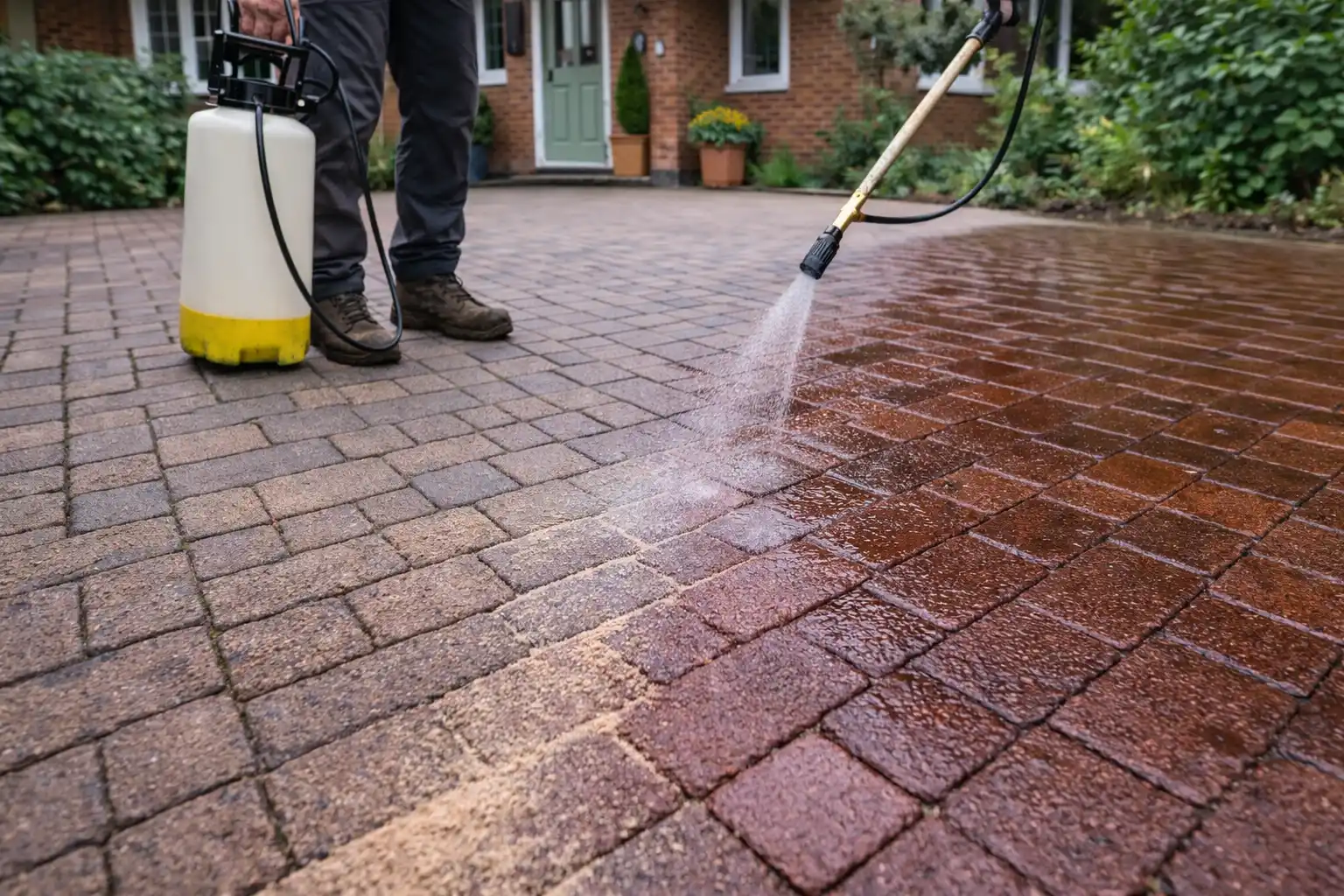
Sand blended with a binder. It is swept into dry joints and then activated with a careful water application, after which it sets into a firm but slightly flexible joint.
In its favour:
- Weeds cannot root in it, which is the main reason people choose it.
- It does not wash out, so it holds on slopes and through heavy rain.
- It stays put for years rather than needing topping up.
- It resists ants and other things that undermine loose sand.
Against:
- Costs more, both in material and in the care the installation takes.
- Unforgiving if done badly. Left on the surface and then watered, it hazes the blocks — a dull film that is genuinely difficult to remove.
- It needs dry blocks, dry weather and a clear forecast. Rain during curing ruins it.
- Repairs are less simple; you cannot just brush a bit more in.
How to choose
Kiln-dried suits a flat drive, in reasonable condition, that gets cleaned on a sensible cycle, where you would rather spend the money on doing that properly and more often.
Polymeric suits a drive that has been fighting weeds for years, anywhere on a slope or where water runs across, and anyone who wants to leave it alone for as long as possible.
There is a middle path that often makes sense: kiln-dried sand plus a seal. Sealing stabilises the surface of the sand so it stops washing out and is far less hospitable to seeds. It costs less than polymeric and lifts the colour at the same time.
The mistake that matters
Whichever you use, the joints have to be genuinely clean first. Sweeping fresh sand on top of contaminated old sand achieves very little — the seed bed is still down there. And with polymeric especially, the surface must be swept properly clear before any water goes near it.
If you are getting quotes, ask which they intend to use and why. A contractor who has a reason for the recommendation is worth more than one who always does the same thing.
Common questions
- Does polymeric sand stop weeds permanently?
- It stops them rooting in the joints, which is where they grow. Windblown seed can still germinate in surface debris, so it reduces weeding enormously rather than ending it forever.
- Can polymeric sand damage block paving?
- Only if installed badly. Residue left on the surface and then watered leaves a haze that is hard to remove. It needs dry conditions and careful sweeping before activation.
- Can I just top up kiln-dried sand myself?
- Yes, and it is worth doing. A bag of kiln-dried sand brushed into low joints on a dry day helps keep the interlock and slows weed return.