Weeds in block paving: why they keep coming back
6 min read Block Paving Revive
Pulling weeds out of block paving treats the symptom. They grow in the joint sand, not up from underneath, and once you know that the permanent fix is obvious.
Almost everyone assumes weeds in a block paved drive are pushing up through it from the soil below. They are not. A properly built drive has blocks over sharp sand over compacted sub-base over membrane, and nothing is getting through that. The weeds are growing in the joints — and that changes the fix entirely.
What is actually happening
The joints between blocks are filled with kiln-dried sand. Over the years that sand gets contaminated: windblown soil, decaying leaves, moss fragments, general road dirt. What starts as clean silica sand slowly becomes a thin strip of growing medium running across your entire drive.
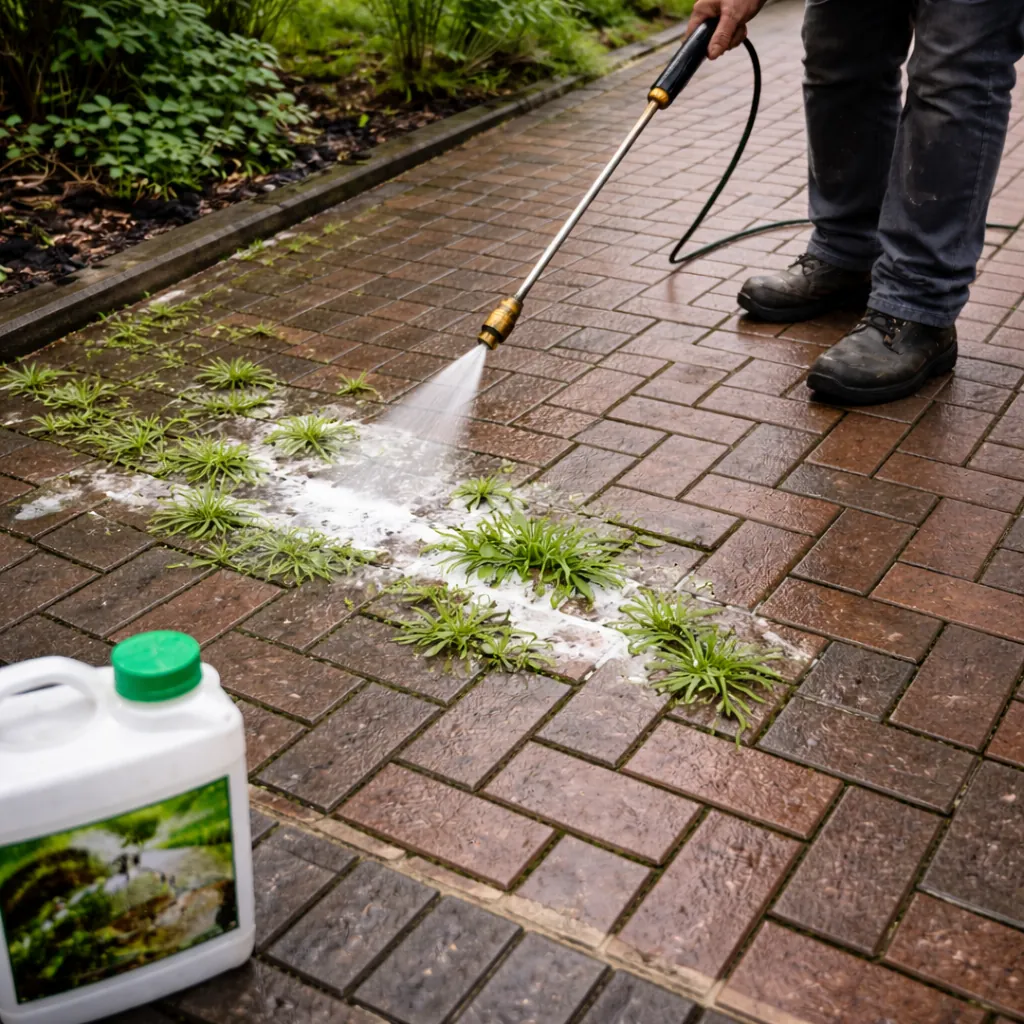
Seeds land in it, and in a damp Yorkshire spring they germinate. The roots stay shallow, confined to the joint. That is why a weed pulls out fairly easily and why it is back in six weeks — you removed the plant and left the seed bed.
Why the usual approaches fail
- Pulling by hand removes the plant and leaves the contaminated sand, plus the seeds already in it.
- Weedkiller kills what is growing today and does nothing about the conditions. It also does not touch the moss that is often the bigger problem.
- Jet washing on its own is worse than it looks. It blasts the joint sand out along with the weeds, and an empty joint refills with dirt faster than it ever did with sand — so the following year is heavier, not lighter.
That last one is the trap. A drive that is jet washed every spring and never re-sanded gets progressively weedier, and eventually the blocks start to move because the joints are no longer doing their structural job.
The fix that lasts
The joints have to be emptied of the contaminated material and refilled with something clean. There are two ways to do that.
Clean and re-sand with kiln-dried sand
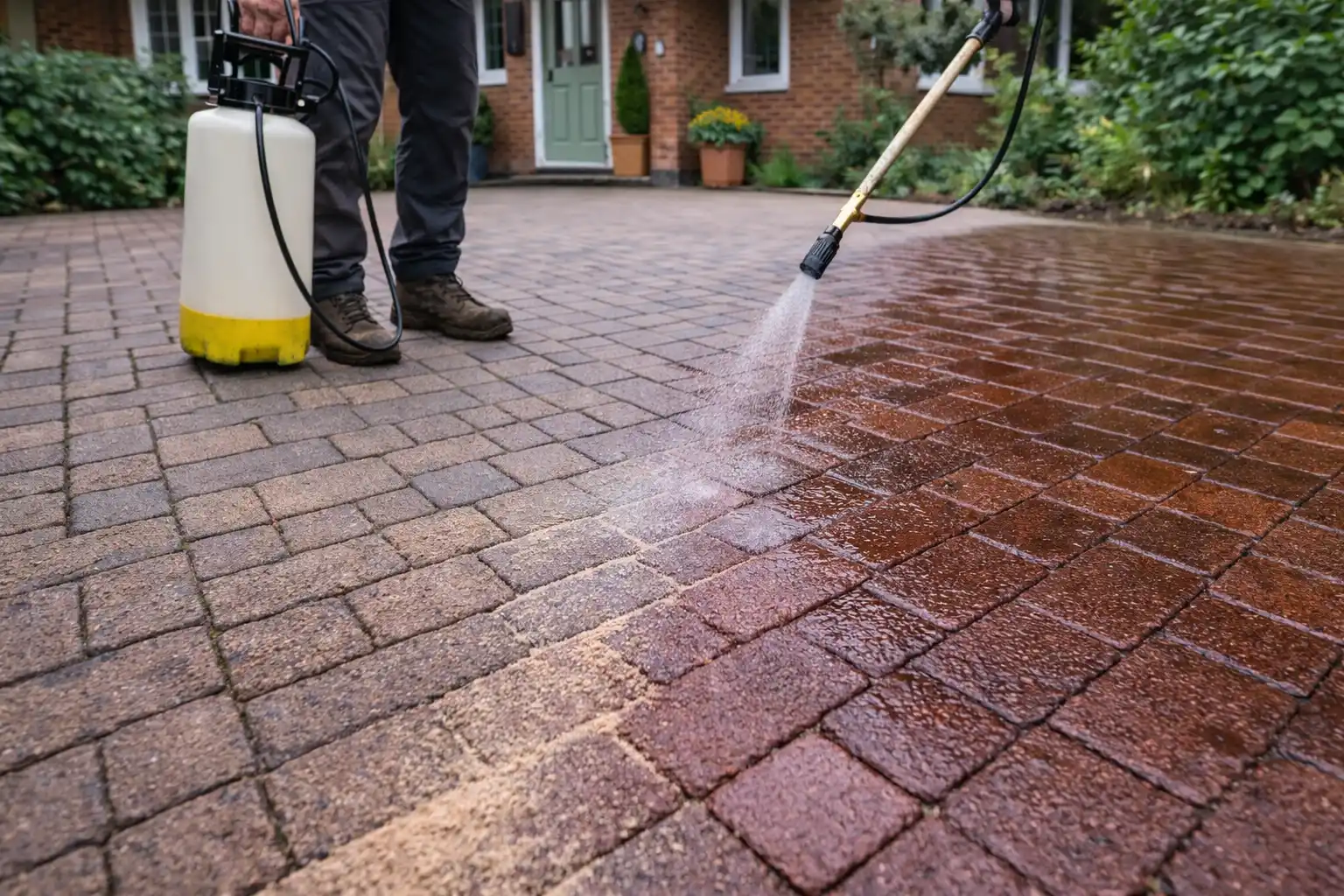
The joints are cleaned out, the surface is treated for moss and algae, and fresh kiln-dried sand is brushed in and compacted. This restores the structural function of the joint and removes the growing medium. It is the standard job and it makes an enormous difference.
Clean and fill with polymeric jointing compound
Instead of loose sand, a polymeric compound is swept in and activated with water so it sets into a firm but slightly flexible joint. Weeds cannot root in it and it does not wash out in heavy rain. It costs more than kiln-dried sand and it wants a competent installation — done badly it hazes the blocks — but on a drive that has been fighting weeds for years it is usually the better answer.
Sealing after re-sanding
Sealing a block paved drive after re-sanding does two useful things: it stabilises the joint sand so it does not wash out, and it makes the surface far less hospitable to regrowth. It also brings the colour up.
The important part is sequence. Seal a drive with contaminated joints and you have locked the problem in. Clean, treat, re-sand, then seal — in that order, with proper drying time between.
Keeping on top of it afterwards
- Brush the drive occasionally; it stops silt building up in the joints.
- Clear leaves in autumn rather than letting them rot in place.
- Do not blast the joints out with a pressure washer as routine maintenance.
- Top the sand up if you can see joints running low.
A drive that has been properly cleaned, re-sanded and sealed will typically stay clear for three to five years rather than needing attention every spring. If yours is weedy every single year, the joints are almost certainly the reason.
Common questions
- Do weeds grow up through block paving from below?
- No. On a correctly built drive the membrane and sub-base prevent that. Weeds germinate in dirt that has contaminated the joint sand near the surface.
- Does jet washing get rid of weeds in block paving?
- Only temporarily, and it makes things worse over time by stripping out the joint sand. Unless the joints are refilled afterwards, they refill with dirt and the weeds return heavier.
- Is polymeric sand better than kiln-dried sand?
- For weed resistance, yes — it sets firm so nothing roots in it and it does not wash out. It costs more and needs careful installation to avoid hazing the blocks.